
Apples as a Baby’s First Food: Starting Solids with Confidence
Whether you’re a new mom or new parent, transitioning to real foods can feel overwhelming. What are the best first foods for babies? How do you introduce solids safely without choking or tummy troubles? Michigan Apples as a baby’s first food can be a simple, safe, well-tolerated, versatile place to begin. We’ll break down your most frequently asked questions so you can start solids with confidence.
March is National Nutrition Month, and this year’s theme, “Discover the Power of Nutrition”, reminds us that small choices early in life matter. Research shows that early exposure to fruits and vegetables increases the likelihood of healthier eating and stronger fruit and vegetable intake later in life. Let’s start building lifelong fruit habits, and maybe even a Michigan Apple lover, from the very first spoonful!
When can Babies Start Eating Apples?
- The World Health Organization (WHO) recommends starting general solids around 6 months of age.
- The American Academy of Pediatrics provides additional developmental guidance on signs that a baby is ready to start solids.
Why Apples Are a Great First Food for Infants
Apples and Constipation: A combination of low fiber and fluid is one of the most common contributors to constipation. When babies first start solids, constipation can sometimes occur because there are many (some, unintentional) changes, such as reduced fluid intake from milk/formula changes and limited exposure to fiber-rich foods.
Apples can help alleviate constipation because they are high in soluble fiber, which forms a gentle gel in the digestive tract, softening the stool, while also supporting healthy motility. They’re also about 85% water, providing natural hydration alongside carbohydrates and potassium. Together, these make apples a nutrient-dense, hydrating, first-food option that can support healthy digestion.
Gentle Texture & Naturally Sweet: Apples lend themselves well to helping infants explore a wide variety of textures. From smooth purees to mashed and finely diced, the texture can grow with the baby—all from one fruit! Exposure to different textures helps develop oral skills and builds long-term tolerance to different foods. For example, eating lumpy textures at the appropriate stage may even help reduce picky eating later in childhood.
The natural sweetness of apples can also support the acceptance of other vegetables. While vegetables should absolutely be offered on their own, the sweetness of apples can make new flavors more approachable and encourage exposure to our veggie friends.
Dietitian Tip: When introducing solids, start with single-ingredient foods so you can easily spot any potential food allergies. Once your baby has successfully tried 10-14 individual foods, you can start combining foods into purees, mix apples into yogurt or oatmeal, or add cinnamon to apple slices for improved palatability.
Apples to Kick-Start Gut Health
When babies start incorporating solid foods, their gut starts building their foundational microbiome for adulthood. Apples contain fermentable fiber, which helps nourish this microbiome.
A healthy gut can make life easier for babies, and for mom and dad, too! It helps keep stool moving at the right pace, improves stool consistency, and plays an important role in building a healthy immune function, which in turn, helps lower the risk of skin issues like eczema and food allergies.
Baby’s First Food Chart & Timing Schedule
Below is a simple guide to preparing apples safely as your baby grows. Apples are convenient, easy to steam and mash, and perfect for batch prepping to make introducing solids simpler.
| Age | Apple Progression | Preparation Tips |
| 6 mos | Smooth purees | Steam peeled & cored apples (8-10 minutes steam basket; 3-5 minutes microwave with a little water) until easily pierced with a fork or mashed between fingers. Blend or mash into a smooth puree before serving. |
| 6-8 mos | Mashed, lumpy, thicker purees | Mash steamed apples with a fork and serve slightly lumpy. |
| 8-10 mos | Steamed apple slices or shredded apples | Soft steamed apple slice (no larger than ½ inch) with peel, seeds, and core removed. For shredded apples, peel and core the apple, then grate it on a cheese grater to create thin, tender shreds. |
| 10-12 mos | Pencil-thin apple slices | Peel and core the apple, removing all seeds. Slice into very thin matchstick-sized strips (about ¼ inch wide), cutting lengthwise into thin slices. |
Safety reminder: When preparing apples, be sure to remove the peel, seeds, and core, and ensure apples are soft enough to mash easily before serving. Fruits with tough skins can be a choking hazard for children under 4 years old. Please refer to the USDA on reducing the risk of choking in young children. All feeding stages should be under direct supervision and only progressed when developmentally ready.
Simple Michigan Apple Baby’s First Food Recipes:
Michigan Apple DIY Baby Food Pouches
Batch and portion these pouches at the start of the week for easy meals all week long. In this recipe, the peels can be left on (for added fiber) since they blend smoothly once cooked. Store in the refrigerator for up to 3 days or freeze for later.
Ingredients:
3 sweet potatoes (cubed)
1-2 Michigan Apples (sliced)
3 cups of cubed carrots, beets, squash, and/or spinach
3-6 prunes
Directions: Steam all fruits and vegetables until fork-tender, then blend until smooth with a food processor or immersion blender, adding steaming liquid as needed to reach desired consistency. Store in a BPA-free food pouch or baggie.
Dietitian Tip: Taste preferences vary and evolve over time. If your baby prefers earthy flavors, increase the vegetables. If they prefer sweeter tastes, add more apple—while continuing to offer a variety of flavors.
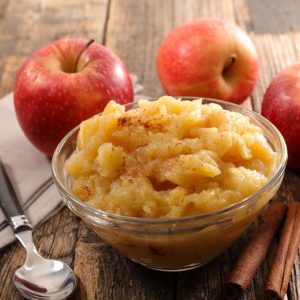
Super Easy Michigan Applesauce Recipe
Ingredients:
4 cups chopped, peeled apples
1 cup water
½ tsp ground cinnamon
DIRECTIONS: Toss the chopped apples, water, and cinnamon into a pot. Bring to a boil, then reduce the heat to low and cook with a lid on, stirring occasionally, until the apples have broken completely apart (about 20-30 minutes). Puree or mash based on the food chart guidance above. Let cool and refrigerate.