
About Michigan Apples: Facts and History
For generations, families in Michigan have continued the tradition of growing apples. With Michigan’s climate, proximity to lakes and nutrient-rich soil, growers discovered Michigan was the ideal place to grow quality, flavorful apples.
Michigan Apple Facts
The Michigan Apple Industry At-A-Glance
Michigan Apples play a vital role in the state’s heritage and economy. Discover more with these essential Michigan Apple facts.
The 2nd Largest
According to USDA NASS data from August 2024, Michigan is the second-largest apple-producing state in the USA.
17.6M Apple Trees
Michigan now has 17.6 million apple trees in commercial production.
850 Farms
Around 850 family-run farms grow Michigan Apples today.
38,000 Acres
Michigan has 38,000 acres of apple trees dedicated to commercial production.
50% Sold Fresh
About half of all Michigan Apples are sold fresh and ready to eat, while the other half are processed into various products.
30M Bushels
In 2025, Michigan Apple growers harvested an estimated 30 million bushels, or 1.26 billion lbs., of apples.
Most Valuable Fruit
Apples are the largest and most valuable fruit crop in Michigan, accounting for 71% of the cash income generated by fruit grown in Michigan.
32 States
Michigan Apples are sold in 32 states and 18 countries.
12,000+ Retailers
There are more than 12,000 retail grocery stores in the U.S. and 150 Michigan farm markets and cider mills carrying Michigan Apples and Michigan Apple products.
Available Nearly Year-Round
Thanks to controlled atmosphere storage, or cold storage, Michigan Apples are available nearly year-round and stay fresh-tasting.
Fresh-Cut Slices
Michigan produces more fresh-cut apple slices and pie apples than any other state.
Health
Apples are a rich source of fiber, a nutrient most Americans lack in their diets. Eating Michigan Apples can help reduce the risk of chronic diseases, including cardiovascular disease and certain cancers.
Where Apples Love to Grow
The Perfect Location for Growing Apples
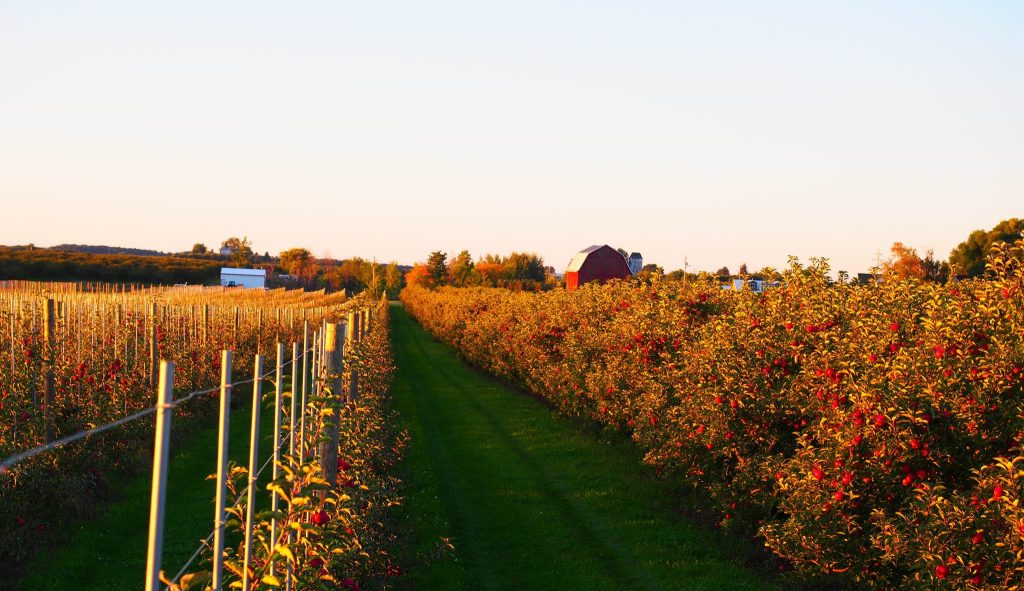
Thanks to Michigan’s unique climate—shaped by the Great Lakes’ moderating influence, nutrient-rich soils, and ideal temperature swings—Michigan Apples are known for their exceptional color, crunch, and flavor.

Ideal Temperatures
The lakes temper cold spring temperatures to protect apples from frost damage while providing needed moisture.

Nutrient-Rich Soil
Michigan’s hilly topography, nutrient-rich soil, cool nights and warm sunny days provide the perfect conditions to produce high-color, flavorful fruit.
Keep Your Michigan Apples Fresh
How to Store and Handle Apples
Michigan Apple growers work hard to bring you the best-tasting apples. Careful handling ensures these apples look great and taste fresh.
Got some apples that need to be used up? Check out the quick tips to incorporate more apples into your diet.
Remember, apples bruise easily.
Always handle apples gently, as bruising impacts both appearance and taste, diminishing quality. Minimize handling to reduce the risk of bruising and keep apples at their peak freshness longer.
Never squeeze, throw or drop apples.
Avoid squeezing, throwing, or dropping apples to prevent internal bruising that leads to early spoilage.
Store in the refrigerator.
Store apples in the fridge, at 34°F, to preserve their crisp texture and natural flavor. Apples stored in the fridge will last longer than apples on the counter.
Use older apples first.
Prioritize using older apples first to ensure your Michigan Apples stay as fresh as possible.
Use a wire or open-style basket.
If you prefer storing apples on the counter for easy grab-and-go snacks, use a food-safe wire or open-style basket. Apples naturally release ethylene gas, which speeds up ripening. An open container traps less ethylene around the apples, helping to slow their ripening and prevent decay.
Keep out of direct sunlight.
While apples stored on the counter won’t last as long as those kept in the fridge, you can extend their freshness by keeping them out of direct sunlight.
More Michigan Apple Facts
Learn More About Michigan Apples
Curious to learn more about Michigan’s most valuable fruit? Explore our frequently asked questions and additional resources.


Note: Some facts have been updated since this publication. An update is coming soon.

The Michigan Apple Committee
Our Mission and History
The Michigan Apple Committee (MAC) is charged with marketing, communications, consumer education and research on behalf of Michigan growers.
Michigan Apple Committee Mission Statement:
The Michigan Apple Committee engages in marketing, research, education and communications for the benefit of Michigan’s apple growers. Our mission is to enhance the reputation of Michigan apples, improve their share of sales in target markets and aid the profitability and sustainability of Michigan’s Apple Industry.
The Michigan Apple Committee was originally established as the Michigan State Apple Commission in 1939 as a commodity group representing Michigan Apple growers. The Michigan State Apple Commission became the Michigan Apple Committee as part of Public Act 232 in 1965. Assessment funds paid by growers allow MAC to communicate and educate consumers, and research to help sustain and grow the industry in our state.
Today, the Michigan Apple Committee is a dedicated team of marketing, communication, and public relations professionals who uphold the goals established by the 1965 Public Act. Together with governor-appointed board members and research subcommittee members, the MAC staff works tirelessly to promote Michigan Apples. They strive to educate consumers on the health and economic benefits of choosing locally-grown, delicious Michigan Apples.

Stay Up-to-Date with Michigan Apples!
Be the first to know about apple harvest, learn more about growers and the science of apple production, discover fun and delicious recipes your kids will love, and support locally-grown produce. Follow us on social media!
Did you know?
Apple Facts
- Archaeologists have found evidence that people have been eating apples since at least 6500 B.C.
- Apples were brought to North America by colonists in the 17th century. In 1625, Reverend William Blaxton planted the first apple orchard on the North American continent in New England.
- Apple varieties brought as seeds from Europe were spread along Native American trade routes, as well as being cultivated on Colonial farms. By the mid-1600s there were about 60 varieties of apples.
- John Chapman, (a.k.a. Johnny Appleseed) really did exist and is one of the reasons why we have so many apples today. Chapman owned many tree nurseries in the Midwest and sold and traded apple trees.
- Apples, species Malus domestica, are members of the Rose family, and have five flowers with five petals and five sepals.
- Because apples naturally emit ethylene gas, you can use them to ripen other fruits. If you have an avocado that’s too hard, place it in a bag with an apple to help soften it!