
Michigan Apples for Retailers and Food Services
Discover the unique flavor and exceptional quality of Michigan Apples for your store, grown in the heart of the Midwest with an ideal blend of climate and soil. With apple farms located across Michigan, sourcing locally-grown, fresh Michigan Apples is simple, giving your customers a taste they’ll love in every bite. Explore tips on handling and storing apples to ensure they stay fresh and appealing on your shelves.
Add Locally-Grown Flavor to Your Shelves
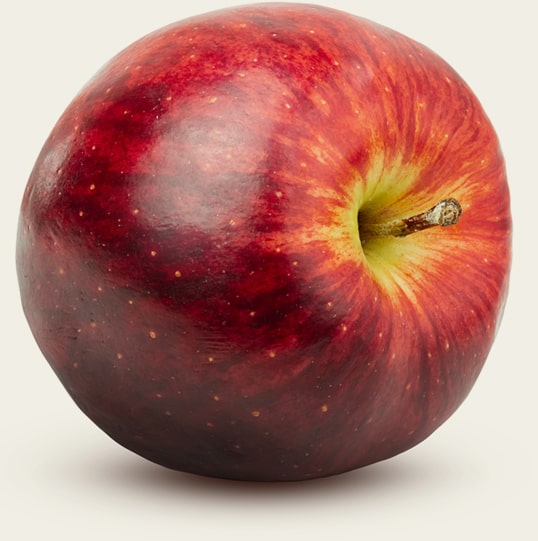
Easy to source local apples
While much of Michigan’s commercial industry is concentrated on the west side of the state near Lake Michigan, apples are grown throughout the state, making it easy to find delicious locally-grown fruit.
Michigan Apple Distributors
Click the button below to search Michigan Apple shippers to easily source locally-grown, fresh Michigan Apples for your customers.
Michigan Apple Processors
Looking for ready-to-use apples to streamline prep for prepackaged salads and offer customers apple slices? Find Michigan Apple processors.

Michigan Apple Exporters
Michigan is a member of the US Apple Export Council. Click below to Michigan Apple exporters to find shippers who are able to export apples.

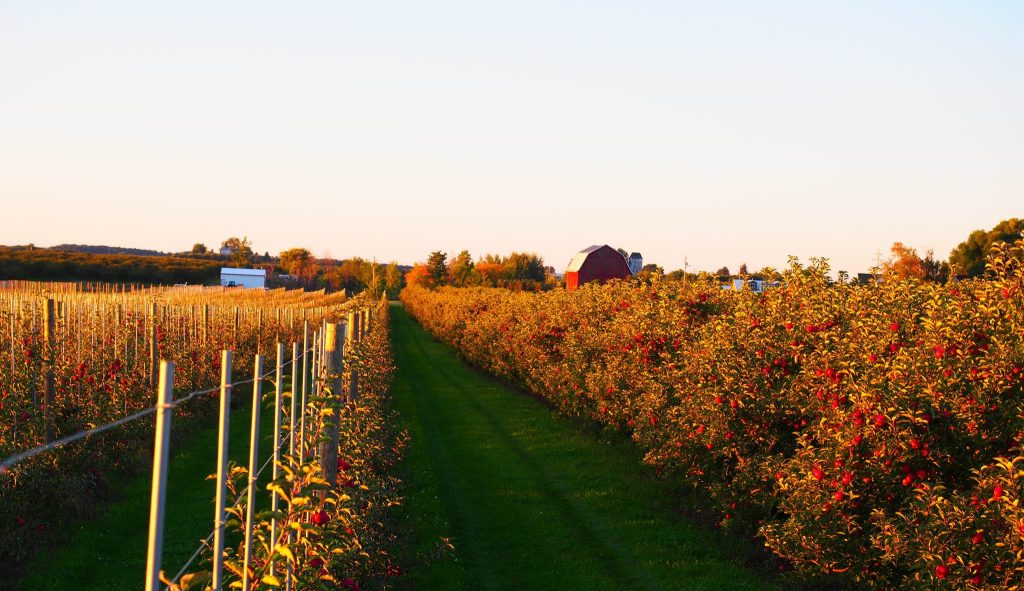
The perfect location for growing apples
Thanks to Michigan’s unique climate—shaped by the Great Lakes’ moderating influence, nutrient-rich soils, and ideal temperature swings—Michigan Apples are known for their exceptional color, crunch, and flavor.
Ideal Temperatures
The lakes temper cold spring temperatures to protect apples from frost damage while providing needed moisture.

Nutrient-Rich Soil
Michigan’s hilly topography, nutrient-rich soil, cool nights and warm sunny days provide the perfect conditions to produce high-color, flavorful fruit.
The Apples Consumers Want
Michigan Apples: What Consumers Say
Consumers prefer Michigan Apples! Consumer research shows that shoppers believe Michigan Apples are fresher and taste better than the same varieties grown elsewhere.
Size and Appearance
Focus group participants indicated they preferred to select individual apples based on size and appearance.
Convenience and Cost
Consumers also liked the convenience and pricing of bagged apples. Michigan Apples are packed in trays, poly, and mesh to meet consumer demand.
Some of the keywords and phrases focus group participants used to describe Michigan Apples:
“Very crisp, very sweet”
“Crunchy, juicy. Love it”
“Juicy, crunchy, sweet, crisp”
“Freshest”
“Good size and color”
“Sweet and tart balanced”
“Great flavor, very juicy, great texture”
“Good fragrance; great flavor”
“Floral smell and sweet taste”
Consumer research was conducted by an independent researcher and funded by Michigan Apple Committee.
Committed to Social Responsibility, Food Safety, and a Healthy Environment
Stewards of the Land and Community
For more than a century, Michigan has been home to orchards that produce flavorful, high-quality apples in many varieties. Michigan Apple growers take great pride in being stewards of the land, and preserving a healthy environment for future generations.
Safety
The USDA’s GAP (Good Agricultural Practices) and GHP (Good Handling Practices) audits help ensure Michigan Apples are produced, packed, handled, and stored following best practices to minimize microbial food safety risks.
Nearly all large Michigan Apple shippers have earned USDA-GHP certification, ensuring safe handling practices.
Approximately 40% of Michigan Apple growers hold GAP certification from the USDA, which verifies on-farm safety standards.
Michigan’s cider industry is proactive in food safety, setting high-quality standards and conducting extensive training to keep consumers safe.
Beyond USDA audits, Michigan Apple shippers, packers, and growers undergo third-party audits to maintain the highest safety standards for consumers.
Through these safety practices, Michigan Apple growers offer full traceability, allowing consumers to trace an apple back to the specific orchard block where it was grown.
Environment
Michigan Apples have a lower carbon footprint due to their proximity to nearly half of the U.S. population, with most locations within 500 miles.
Michigan Apple growers use integrated natural pest and disease management, including some organic practices.
The Michigan Apple industry uses recyclable packaging, composts tree trimmings, and employs energy-efficient lighting and cooling methods across the supply chain.
No-till practices adopted by Michigan Apple growers help reduce soil erosion, supporting long-term soil health.
With 17.6 million apple trees in Michigan, the state’s orchards play a vital role in capturing carbon dioxide and producing oxygen.
Community
Today, there are 850 apple growers in Michigan, with some farms in their fifth and sixth generations! The tradition of apple growing in Michigan also means a commitment to community and social responsibility, as well as providing a fresh, quality, safe product for consumers to enjoy. Each year, Michigan Apple growers donate more than one million pounds of apples to hungry families through the Michigan Food Bank Council.

Apple Handling Tips for Retailers
Tips for Retailers to Keep Apples Fresh
Michigan Apple growers and shippers work hard to get the best tasting apples to your stores looking great and tasting fresh. Careful handling can translate into increased retail sales.
Making sure the apples keep a fresh, unblemished look is now in the hands of your produce department. Here are some tips:
Handle with Care:
Remember apples bruise easily.
Never squeeze, throw or drop apples.
Minimize handling.
On Display:
Discard bruised, blistered or punctured apples.
Place newer apples on bottom and older ones on top.
Use signs and displays to increase sales.
Entice Customers:
Offer free samples.
Conduct cooking demonstrations.
Use promotional tools from Michigan Apple Committee.
Upon Delivery:
Stamp boxes with shipment date.
Store in climate-controlled atmosphere (34º F is optimal).
Rotate boxes in the storage area.
Use older apples first.
When Re-Ordering:
Pay attention to buying habits.
Order according to demand.
Offer several varieties.
Keep supply of fresh apples in storeroom.